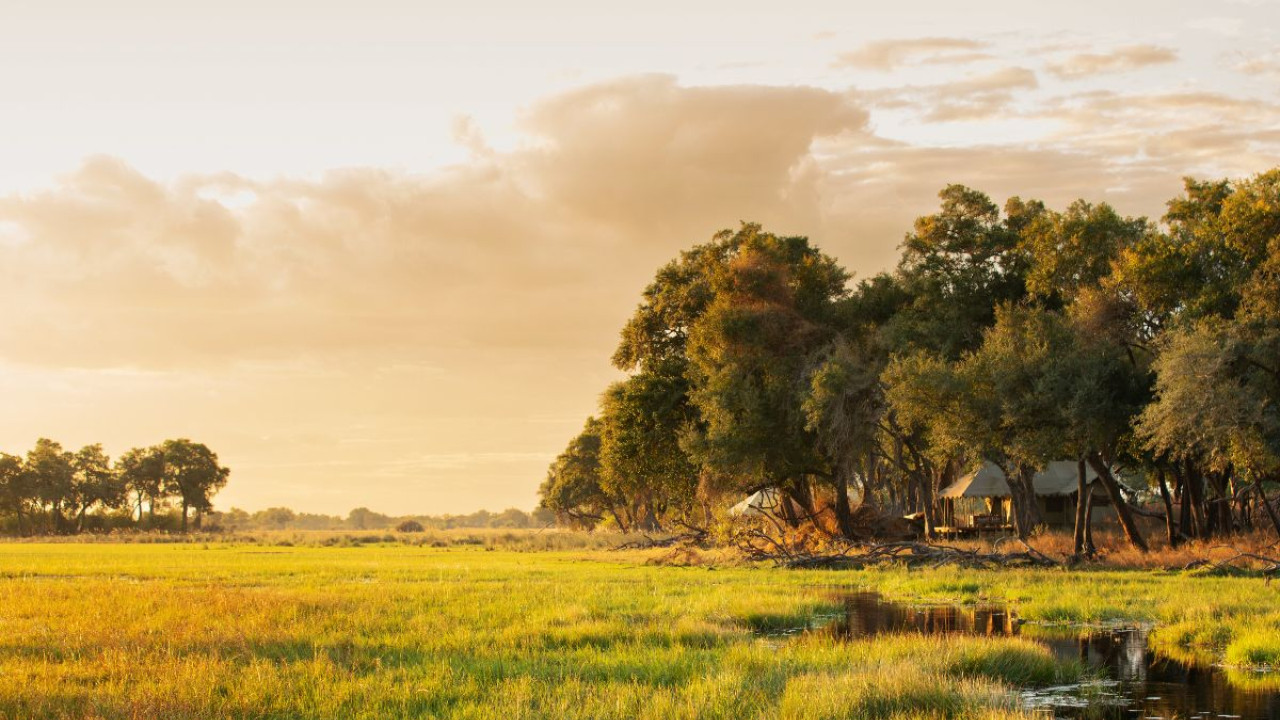
Ryan travelled to Botswana in April 2026, to experience one of Great Plains' magical luxury camps.
Read all about his thrilling experience below:
Before we dive in, I have to cop to the fact that all of the images below were captured on my iPhone camera. I've already decided to invest in some equipment that will do these sightings more justice in future.
Day One | Off on an adventure!
I flew out of Cape Town on a Monday morning and by early afternoon I'd landed in Maun, a town that always feels like the true starting line of any Botswana trip. Great Plains had a concierge waiting for me before I'd even cleared customs, and within minutes I was in their private lounge across from the airport, wrapped in the smell of a peppermint-scented cloth and handed something cold to drink. It's a small touch, but it works. You arrive dusty and slightly frazzled from a flight, and within five minutes you feel like you're already in the bush.
From there it was a short bush flight with MackAir up to the Omdop airstrip, and I was lucky enough to ride shotgun, given the flight only needed one pilot. Twenty-five minutes of watching the Delta unfold beneath me, its waterways carved out by generations of elephants and hippos, scars across the landscape that from the air look almost deliberate, like brushstrokes. Then a quick game-viewer transfer to a helipad, and a helicopter flight that lasted all of two minutes before reaching Duba Explorers Camp. I will say, those two exhilarating minutes did more for my heart rate than anything else that week. I hadn't been in a helicopter in a decade, and doing it low over the Okavango is not a bad way to remedy that.
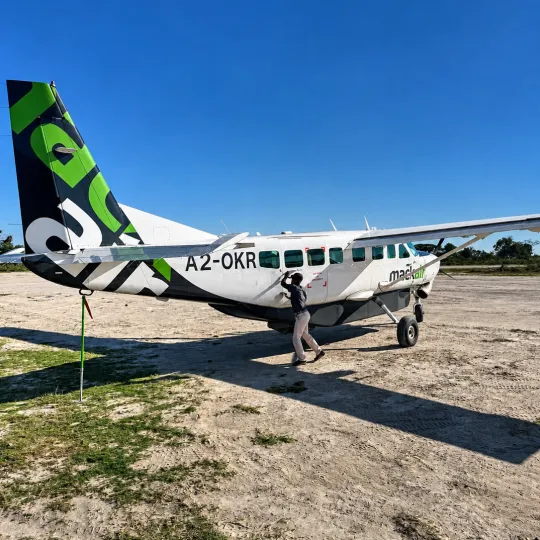
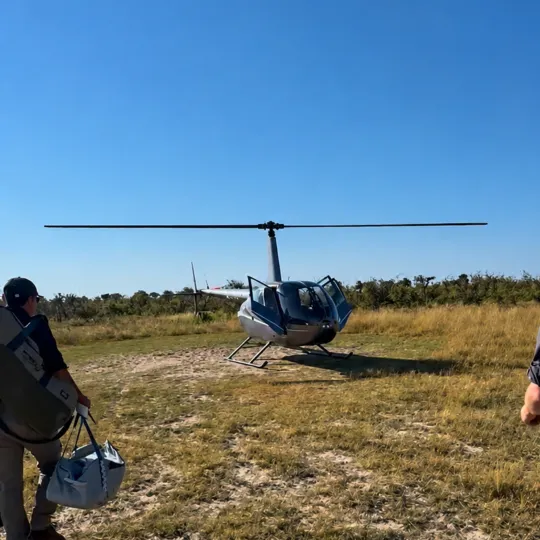
Various modes of transport to get to Duba Explorers Camp.
The warmest of welcomes
As I disembarked the helicopter just in front of Duba Explorers Camp, Brooklyn, one of the camp managers, met me alongside five ladies singing me across a wooden bridge and onto the island that would be home for the next four days. I had no idea, at that point, that the very same bridge would soon become a nightly thoroughfare for the local wildlife. I was shown around by the Camp Manager, Head Chef and my guide, given a proper briefing on the potential activities for the days ahead.
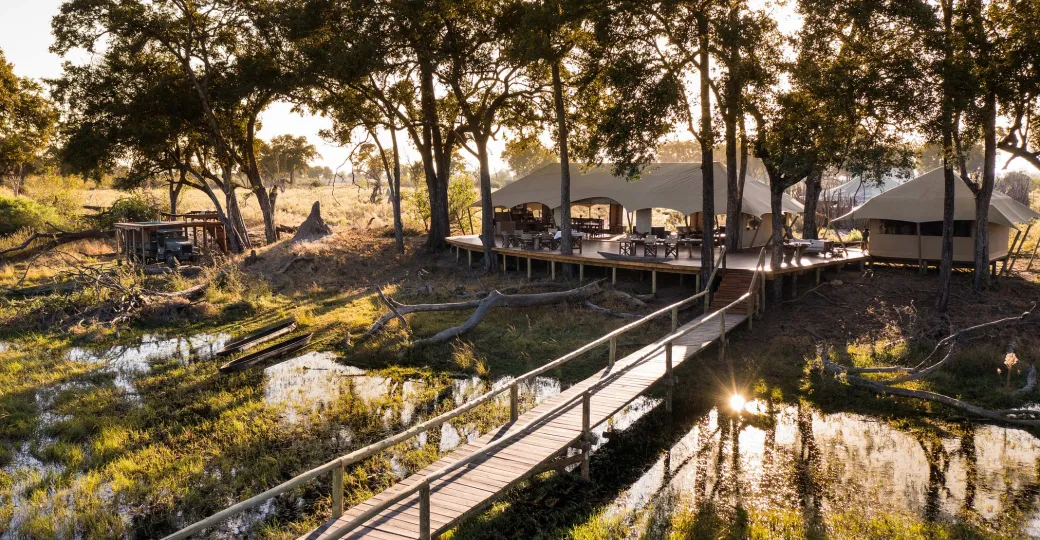
A welcoming entrance to the Duba Explorers Camp.
After the briefing I was sent off almost immediately on my first excursion, a quiet Mokoro glide with a fellow guest, Joel. The Mokoro itself is a traditional Batswana canoe, though these days built from fibreglass rather than the original wood, and the men who steer them, the polers, start learning the skill from the age of six. We weren't out there for big game. We were told to expect reptiles, amphibians and insects, and to enjoy the stillness instead. I did. The Painted Reed Frog and the Long Reed Frog, both barely bigger than my thumb, were the highlight, alongside a story from the polers about their forefathers using giant lily pads as sun hats while fishing, and paddling all the way to Maun, a journey that could take twenty days.
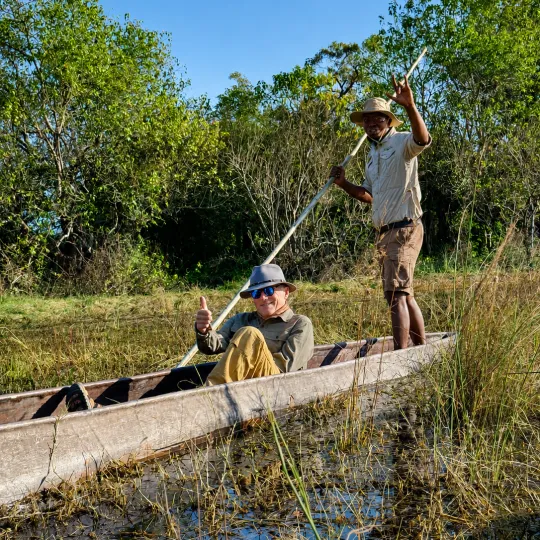
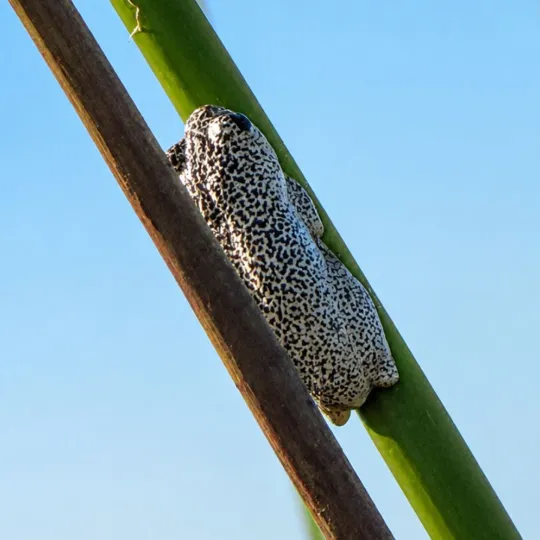
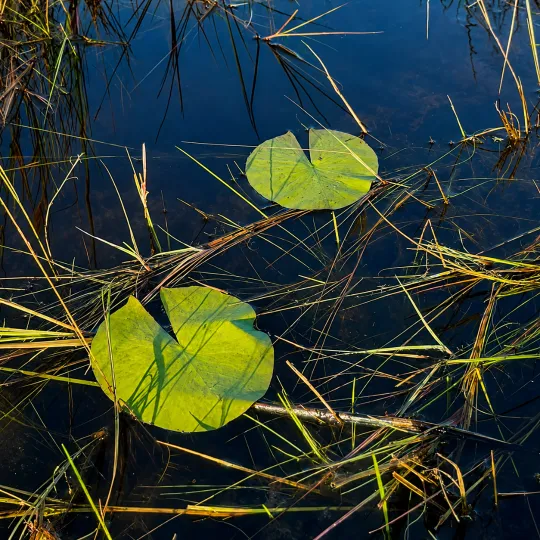
Travelling by Mokoro through the tranquil waters of the Okavango Delta.
Dinner that first night set a standard I wasn't expecting. Three courses, properly plated, explained dish by dish by the Head Chef, the sort of meal you'd expect from a serious restaurant in a major city, not a tented camp deep in the Delta. I still can't fully picture the logistics behind it. We were joined by Zara, who supplies Duba Explorers Camp and other Great Plains Conversation properties with their wine, and Colleen, who heads up Food and Beverage Development for the group, and between the wine pairings and the conversation, it turned into a proper evening.
Then came the part of the trip I'll be telling people about for years...
Something went bang in the night
I went to bed to the sound of grunting hippos, elephants moving along the riverbed, and owls waking up for the night, which felt like the perfect African lullaby right up until it wasn't. A crash sounded right by my ear. I was on my feet before I'd properly woken up, wearing nothing but my underpants and completely ignoring the near-freezing night air, and found a mother elephant and her calf feeding on the bushes not three metres from where I stood. I hadn't heard a thing until that moment, which still baffles me given their size. I stood there, torch in one hand and phone recording in the other, trying to process what I was watching. I'd only just drifted back off when a trumpeting bull elephant came crashing through the river and straight through a bloat of four enormous hippos, sending a wave rippling downstream in both directions. Three hours' sleep. Worth every second of it.
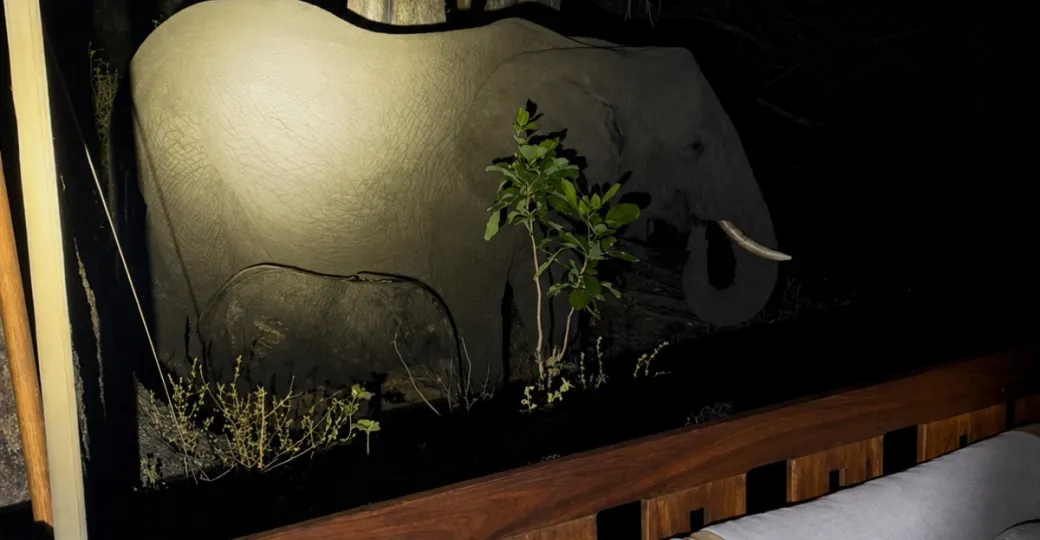
Midnight munchies for two curious eles.
Day Two | Sightings that touched my soul
The average person, apparently, only consciously witnesses a few thousand sunrises in an entire lifetime, and the one I watched from the game viewer that morning is one I'll count twice. Having grown up in South Africa, I don't say that about many sunrises, but the light over the Delta that morning earns it.
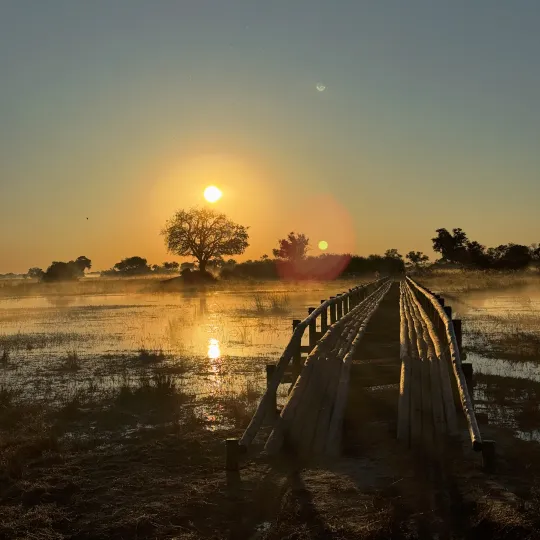
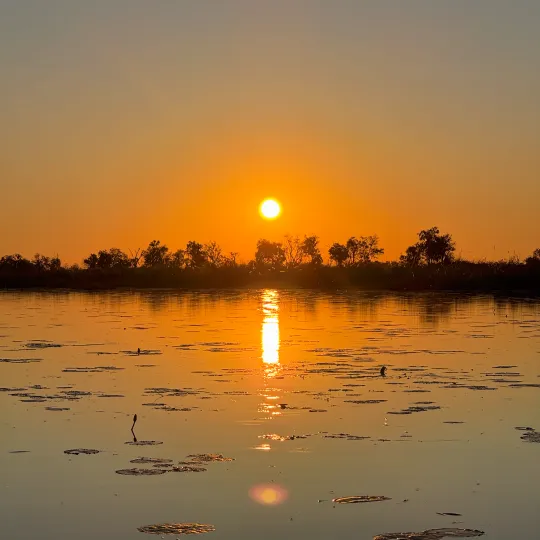
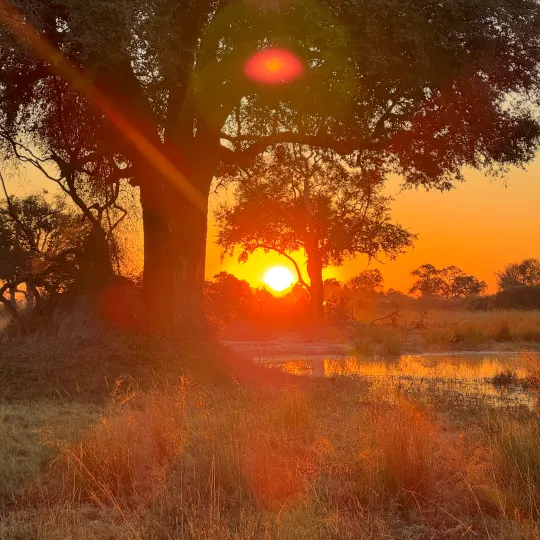
Photos will never do the sunrises and sunsets in Botswana justice.
We picked up lion tracks not long after leaving camp, alongside a steady stream of elephants, giraffes, plains game and birds, before finally catching up with the pride itself.
Utterly devastating to see
Two lionesses and four cubs, one of them, the smallest, dragging an injured back leg like dead weight. Our guide Kitso didn't dress it up. He reckoned she wouldn't survive the pride leaving her behind to hunt, that she'd be too vulnerable to predation, though he added, almost gently, that it would be a kinder end than starvation or dehydration. It's a hard thing to sit with, watching something so young fighting odds that are already stacked against her, but it's also, I think, exactly why people come here. Africa doesn't perform a sanitised version of itself for visitors. It’s raw and true.
We left the pride to rest and not long after found ourselves alongside a genuinely enormous migration, over five hundred buffalo and fifty zebra moving through the Delta in an unbroken stream. We sat and watched for half an hour without saying much of anything.
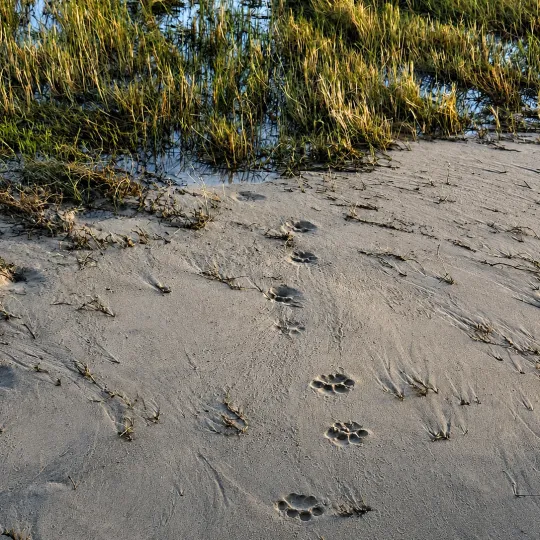
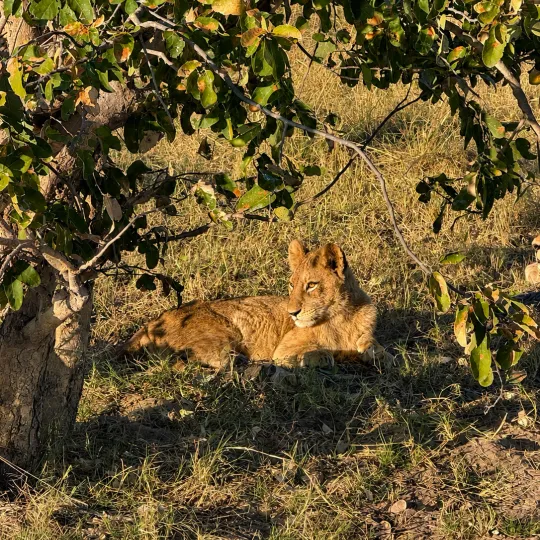
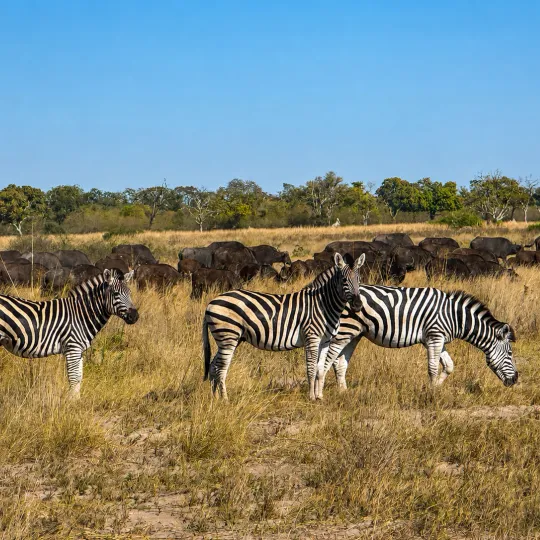
Lions tracks, an injured cub and a large migration.
Hands like a seasoned surgeon
On the way back to camp, a troop of baboons gave us a sighting none of us had asked for. A young baboon caught a Smith's bush squirrel high in a sausage tree and dropped it down to the alpha male waiting below, who dealt with it in seconds, with a precision that had all of us comparing him, only half-jokingly, to a surgeon. Not the "live action kill" we'd been hoping for after the migration, but fascinating all the same.
After lunch and a siesta back at Duba Explorers Camp, we reconvened for high tea before heading back out for the evening drive. Sightings were quieter, but we caught a Verreaux's Eagle Owl fully awake in broad daylight, unusual for a bird built for the night, and a herd of at least ten elephants with two calves play-fighting while the adults nudged them gently back into line whenever things got too rough. There's something quietly moving about watching that kind of patience in an animal that size.
A reminder of nature's resilience
We found the lion pride again as the light dropped, and for a while, the injured cub was nowhere to be seen. We feared the worst, until we heard her, dragging herself back to the group, crying the whole way. Even Kitso, who's spent years out here and presumably seen this play out before, went quiet for a moment. Not long after, the healthy cubs climbed into a fallen, still-growing tree that had become the pride's lookout point, turning it into something like a jungle gym, while their injured sibling lay below in the tree's hollow. None of us could really bear to watch much longer after that.
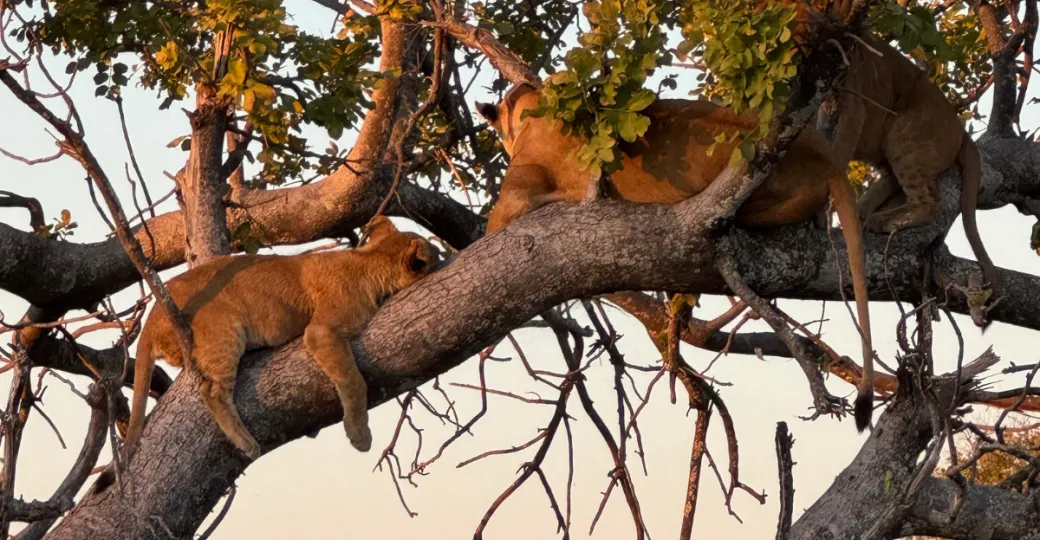
Pride of lions lounging in a fallen tree.
Day Three | Full of surprises
Every morning began the same way, woken at six with a hot drink of your choosing, and this one was cold and misty enough that blankets and a hot water bottle came out for the first time all trip, much to this South African's mild embarrassment. We went looking for a leopard that another guide's group had spotted the night before, no luck there, but an alarm call from a Red-billed Spurfowl led us to a lone Spotted Hyena, an animal Kitso hadn't seen in the area since before Covid.
The real prize came on the way back to camp, when Kitso took a small detour to an old termite mound he suspected might have new residents. Two serval kittens had emerged and were playing around the mound, animals so rarely seen they hadn't even made my list of hopefuls. We kept our distance, about fifty metres, given how skittish they can be, and I didn't manage a single decent photo on my phone. I didn't mind. Some sightings are better lived through binoculars than through a screen.
Local is "lekker"
("Lekker" is a popular South African word from Afrikaans and Dutch origin, that means nice, tasty, great, or fun).
Back at camp, I'd almost forgotten a passing comment I'd made the day before to Bonolo, one of the team, about wanting to try a proper Batswana meal. She came to find me looking a little too pleased with herself, offering to show me more of Duba Explorers Camp, and it slowly dawned on me, as she gathered the other guests along the way, that my offhand request had turned into a full feast for everyone, laid out on the water's edge overlooking the Delta. It's a small thing to ask for and an enormous thing to receive, and it told me everything about how this team operates. They listen, and then they go quite a bit further than you'd ever think to ask.
That evening, five of us headed out on a boat cruise, a welcome change of pace from the game viewer. The standout moment was an elephant bull working to pull down an entire tree, leaves drifting down around him and catching the light like a shower of gold. We finished with sundowners under a properly spectacular sunset. That evening, dinner brought one more thoughtful touch, being the only guest travelling solo, the team arranged for Bonolo to join me. We spent the evening swapping stories about growing up in Africa, and she told me about her tribe's totem animal, the monkey, which members are never permitted to hunt or harm, a small window into a culture I'd only otherwise have skimmed the surface of.
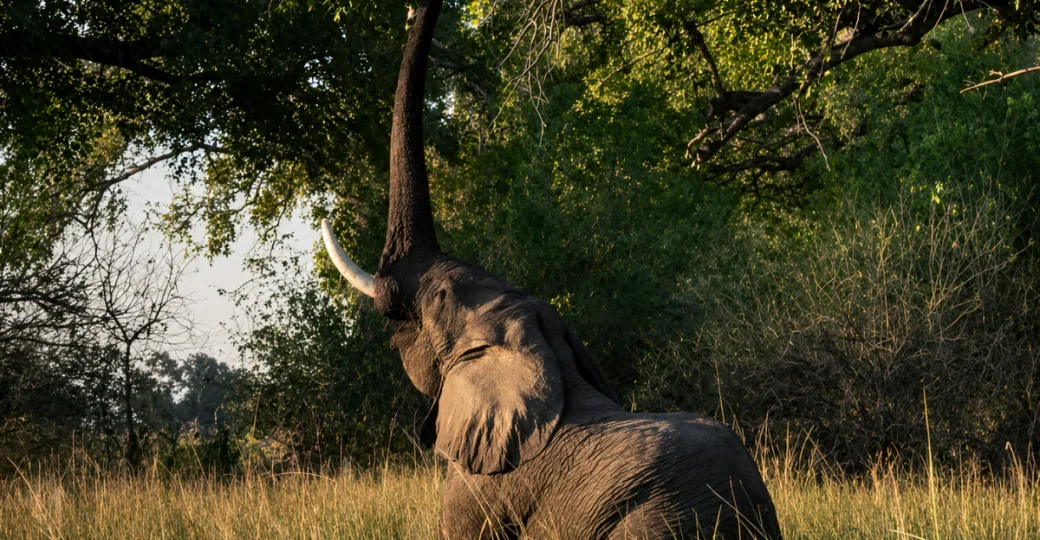
Bull elephant pulling down enormous branches to feed upon.
Day Four | It's not goodbye, it's see you later
My flight out was early, so the team squeezed in a shortened final drive. We'd barely left camp when word came through on the radio of two male lions moving quickly nearby. Kitso recognised them instantly, the fathers of the cubs we'd spent the last three days following. A proper full-circle ending to a trip that had already given me more than I knew what to do with.
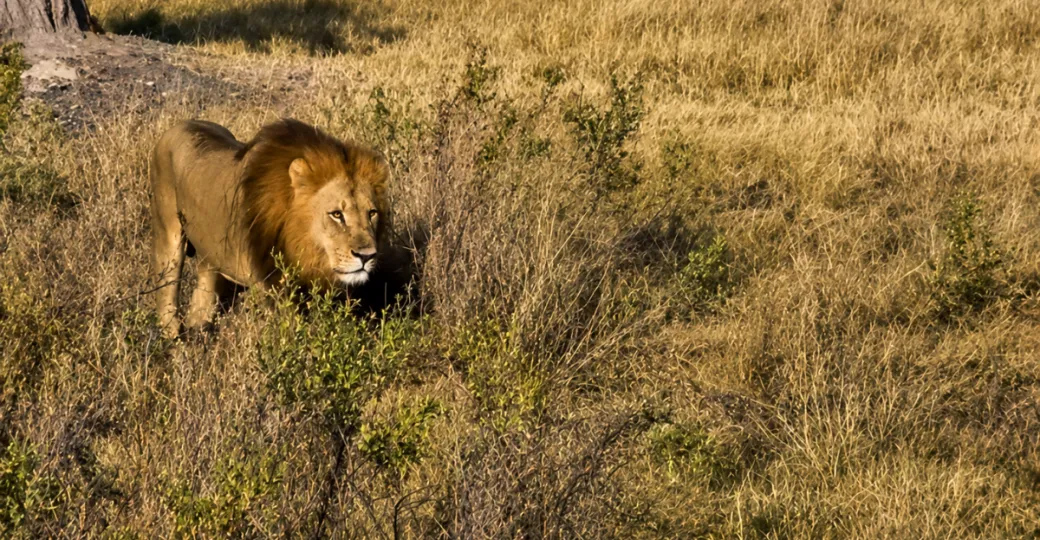
The prodigal male lions appear.
There's a version of Africa you can read about, and there's the version that finds you at three in the morning, standing in your underpants, three metres from an elephant. I'd take the second one every time.
If you want to experience more sunrises and sunsets in Africa or elsewhere, reach out to your friends at Bonamy and we’ll make it happen.
Ryan Jones
South African-born and raised, Ryan is Bonamy’s Capetonian Marketing Magician. Growing up with Africa’s incredible landscapes on his doorstep fostered a lifelong passion for travel, food and exhila...
View profileNever miss a notebook entry with our newsletter